 admin
adminIntroduction: The Failure of Perimeter Security
The traditional security model, known as perimeter security, assumes that everything inside the network (behind the firewall) is trusted, while everything outside is untrusted. In modern, complex deployments like a V2Ray service—which involves multiple protocols, third-party CDNs, and API access—this model is dangerous. If an attacker manages to breach the perimeter (e.g., gains access to one user’s UUID or compromises the Nginx web server), they are instantly given full trust to roam the entire internal network.
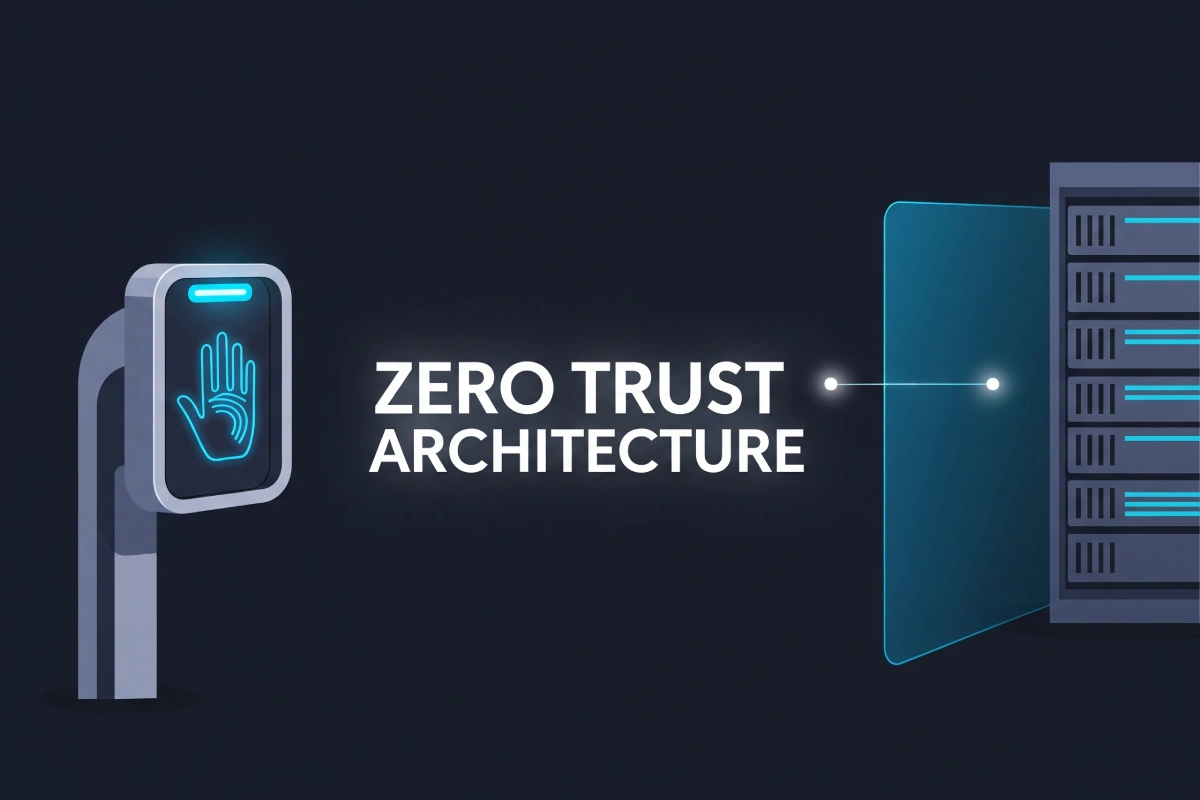
Zero Trust Architecture (ZTA), coined by security experts, fundamentally changes this model. The core principle is “Never trust, always verify.” Under ZTA, access is never implicitly granted based on location; every user, device, application, and network flow must be continuously validated before being allowed to interact with any resource, even internal ones.
For V2Ray, ZTA is vital for securing the administrative control plane, protecting the API, and isolating high-risk components.
Section 1: The Core Principles of Zero Trust
ZTA is a policy framework built upon three foundational tenets that move security enforcement to the individual resource level.
1. Identity is the Primary Security Perimeter
Instead of relying on firewalls (network perimeter), ZTA relies on strong, context-aware user and device authentication. Every access request—whether from a remote administrator via SSH or a local script accessing the V2Ray API—must use strong, often multi-factor, authentication.
- V2Ray Application: VLESS UUIDs and REALITY keys are the primary identities for client access. These must be cryptographically verified for every connection.
- Administrative Layer: SSH access must rely on strong key pairs, not passwords. Access to the management API must be tied to a specific, trusted local process (Article 38).
2. Micro-segmentation and Least Privilege
This principle limits the scope of access. Instead of granting wide access to the entire network, access is granted only to the specific resources absolutely required for a task.
- Micro-segmentation: The internal network is broken into tiny, isolated zones. The V2Ray Inbound listening on Port 443 is one zone; the API listening on Port 10000 is another.
- Least Privilege: An administrator accessing the server should only be allowed to use SSH and access the V2Ray log files. They should not have permission to view other users’ raw data files or modify kernel parameters unless explicitly performing a tuning task (Article 49).
3. Continuous Monitoring and Validation
Trust is never static. ZTA requires continuous auditing of the connection status, device posture, and user behavior.
- Audit Logging (Article 42): Every action, from API calls to failed connections, must be logged.
- Behavioral Analysis: If a user who normally connects from North America suddenly attempts to log into the administrative SSH from an IP in Eastern Europe, the connection should be instantly flagged or denied, even if the correct SSH key is provided.
Section 2: Implementing ZTA in the V2Ray Architecture
Applying Zero Trust principles requires specific V2Ray and host-level configurations that isolate critical functions.
1. Isolating the Administrative API
The V2Ray API (Article 38) is the most sensitive internal resource. ZTA demands that API access is locked down.
- Localhost Enforcement: The API must only listen on
127.0.0.1. - Internal Firewalls: Even though it’s on localhost, specific
iptablesrules should be used to restrict access to the API port (e.g., 10000) to only the specific user or Docker container that runs the V2Ray management panel. This micro-segmentation prevents a malicious process running on the same host from gaining control of the V2Ray core.
2. Segmenting Inbounds and Outbounds
Routing rules (Article 19) are used to enforce micro-segmentation at the application layer.
- Risk Isolation: Create separate Inbounds for high-risk protocols (e.g., mKCP over UDP) and high-stealth protocols (VLESS over wSS). Traffic from the mKCP Inbound might be subject to stricter blocking rules or lower QoS limits, effectively segmenting the riskier traffic flow.
- Outbound Segregation: Critical system traffic (e.g., NTP time sync, certificate renewal) should be routed to a dedicated, secure
directOutbound, ensuring that this sensitive traffic is never mixed with user proxy traffic.
3. SSH and Remote Access Verification
Remote administrative access is a major ZTA concern.
- Two-Factor Authentication (2FA): Implement time-based one-time passwords (TOTP) for SSH login, even after successful key authentication. This ensures that the identity is verified by two factors.
- Jump Hosts: Instead of connecting directly to the V2Ray server, administrators should connect to an intermediate, highly secured Jump Host. The Jump Host acts as a single, verified entry point for the entire infrastructure, making auditing and access control far simpler.
Section 3: Performance and Auditing Under ZTA
Zero Trust is often perceived as slowing down operations, but modern implementations are designed for minimal latency overhead.
1. Performance Impact Mitigation
By restricting enforcement to the internal administrative perimeter, ZTA largely avoids impacting client throughput.
- Stateless Protocols: Because VLESS/REALITY are stateless, the continuous verification only happens at the connection establishment phase, not during the data transfer phase, thus avoiding latency on bulk traffic.
- Policy Enforcement: V2Ray’s policies (Article 39) enforce limits only after the identity is verified, ensuring efficient resource allocation immediately.
2. Auditing ZTA Violations
The logs become the single source of truth for ZTA enforcement.
- Failure Analysis: Audit logs (Article 42) must be configured to log all failed authentication attempts, all instances where policy limits were reached, and any access attempt to the restricted API port.
- Compliance Check: An automated script can parse the logs to verify that internal V2Ray communication (e.g., V2Ray accessing the local Nginx on Port 8080) is consistently occurring only on
127.0.0.1, confirming that the micro-segmentation is holding.
Conclusion: Securing the Future of the Proxy
Zero Trust Architecture is the mandatory security philosophy for protecting modern V2Ray infrastructure. By moving away from the dangerous assumption of internal trust, and instead enforcing continuous, resource-specific validation across all layers—from SSH access to API interaction and internal routing—administrators eliminate critical attack vectors. ZTA ensures that even if a credential is leaked or an application component is compromised, the damage is strictly contained, guaranteeing the long-term integrity and resilience of the entire V2Ray service.

